
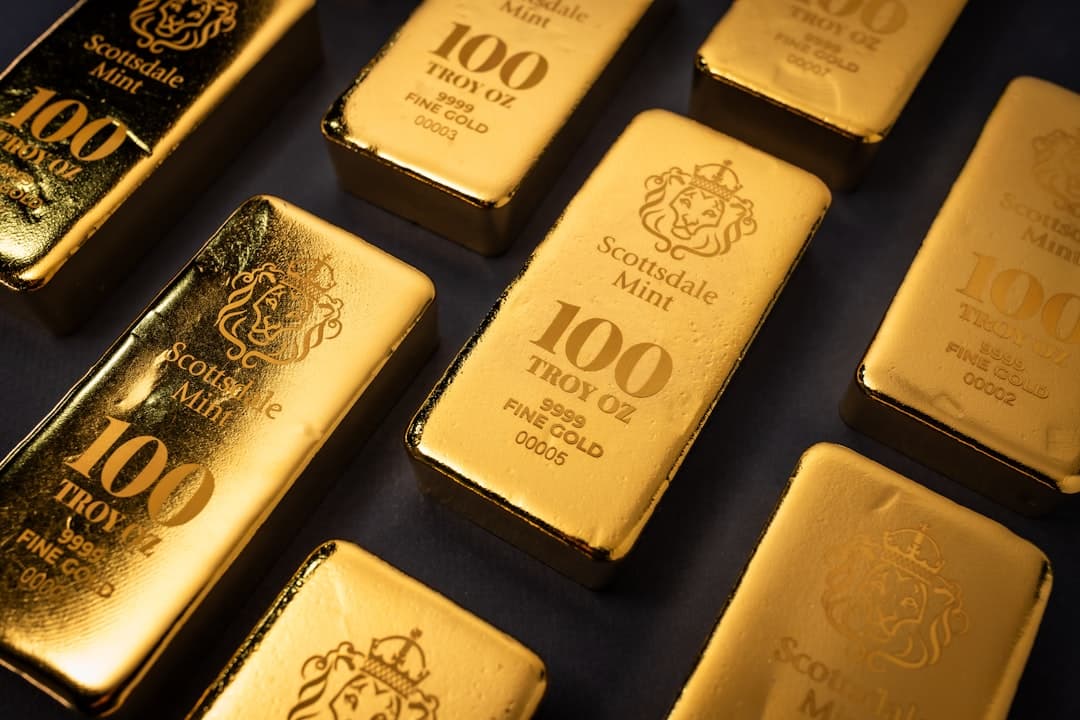
On April 8, 2026, as Nifty attempted a fragile bounce and RBI held rates steady, gold crossed ₹75,000 per 10 grams for the first time. It was not a coincidence. It was the market doing exactly what it has always done when fear takes over.
Gold is the oldest safe-haven asset in the world — and in India, it carries an additional layer of cultural familiarity that makes it uniquely powerful as both a financial instrument and a psychological anchor. Understanding why gold rises during crises, how to own it efficiently, and how much to hold is one of the most practically useful things an Indian investor can learn.
Why Gold Rises When Markets Fall
The mechanism is straightforward once you understand it.
When geopolitical or economic uncertainty spikes — a war, a financial crisis, a pandemic — institutional investors globally reduce their exposure to risk assets like equities and corporate bonds. They need somewhere to park that capital that is liquid, globally recognised, and not dependent on any single government's solvency.
Government bonds (especially US Treasuries) absorb a large share of this flight-to-safety flow. But gold absorbs the share that wants zero counterparty risk. Unlike a bond, gold doesn't depend on a government being able to repay. Unlike a currency, it can't be inflated away by a central bank printing money. Unlike equities, it doesn't require a company to keep generating profits.
Gold is no one's liability. That's its fundamental appeal in a crisis.
The Iran-US conflict that began in late February 2026 triggered exactly this dynamic. Oil spiked to $110+, inflation fears escalated, central banks globally signalled they couldn't cut rates, and investors began reducing equity exposure across emerging markets. The dollar strengthened. And gold — priced in dollars but rising in dollar terms — appreciated sharply.
In rupee terms, the move was amplified. A weaker rupee meant that even if gold's dollar price rose only modestly, its rupee price jumped more significantly. At ₹93 per dollar versus ₹83 a year earlier, the same gold holding is worth approximately 12% more in rupees before the commodity price increase even factors in.
The Historical Pattern Is Consistent
This isn't a one-time phenomenon. The data is clear:
2008 Global Financial Crisis: The Sensex fell approximately 60% from peak to trough. Gold in India rose from roughly ₹10,000 to ₹15,000 per 10 grams during the same period — a 50% gain while equities were in freefall.
2020 COVID Crash: The Nifty fell 39% between February 28 and March 23, 2020. Gold rose approximately 28% over the calendar year 2020, ending at all-time highs even as equity markets whipsawed.
2022 Global Rate Hike Cycle: Indian equities fell roughly 15% from peak to trough. Gold remained essentially flat — which, relative to equity losses, constituted significant outperformance.
The pattern across three different types of crises — financial contagion, pandemic, monetary tightening — is that gold either rises or holds value while equities fall. It is not a perfect hedge (nothing is), but it is a consistent one.
How to Own Gold Efficiently in India
The gold jewellery sitting in most Indian households is technically exposure to gold, but it's an inefficient form. Making charges of 10-20% on purchase and the difficulty of selling jewellery at fair market value mean it underperforms the actual gold price. For investment purposes, three instruments make far more sense.
Sovereign Gold Bonds (SGBs). Issued by RBI on behalf of the Government of India, SGBs are the most efficient way to hold gold for most investors. You buy them at market price, receive 2.5% annual interest (paid semi-annually) on top of any price appreciation, and if you hold to maturity (8 years), capital gains tax is waived entirely. The only limitation is liquidity — they trade on BSE and NSE but volumes are thin, so selling before maturity may require accepting a discount to NAV.
Gold ETFs on NSE. Gold Exchange Traded Funds hold physical gold and trade exactly like stocks on the exchange. You can buy and sell any time during market hours at live prices, with no storage cost on your end (the fund bears it). Expense ratios are typically 0.5-1% per annum. Unlike SGBs, there's no interest income, but liquidity is excellent and minimum investment can be as low as one unit (roughly 1 gram of gold).
Digital Gold platforms. Services like MMTC-PAMP allow buying fractional gold that is physically stored on your behalf. Convenient for small amounts but comes with platform risk (the company must remain solvent) and is less regulated than SGBs or ETFs.
For most investors, a combination of SGBs (for long-term allocation) and Gold ETFs (for liquidity) is the most practical approach.
How Much Gold Should You Hold?
The financial planning consensus globally is 5-10% of total portfolio value in gold — and that's a steady-state allocation, not a crisis response.
The instinct to buy gold after it has already risen sharply is understandable but typically suboptimal. At ₹75,000 per 10 grams, gold has already priced in significant fear. If the Iran conflict de-escalates or oil prices fall, gold will give back gains quickly.
The correct mental model is insurance. You don't buy fire insurance after your house has started burning. You build a gold allocation when markets are calm, so that when a crisis arrives, you already own the hedge.
If you currently have zero gold exposure and are looking at a 20% down equity portfolio, adding a small gold position now is still rational — it provides some protection if the crisis deepens. But don't chase a spike. A gradual accumulation through Gold ETFs (buying on down days rather than up days) is more sensible than a lump-sum purchase at current levels.
The investors who benefit most from gold in a crisis are those who already held it before the crisis began. That's the lesson worth internalising for the next cycle.
For live gold price tracking, crisis hedging analysis, and portfolio allocation tools, visit while25.com.