
Anthropic has set a price range of $70 to $78 per share for its initial public offering, or IPO. An IPO is a company's first sale of stock to the public. Anthropic is offering 825 million shares. At the top of the range, the sale would bring in up to $64.35 billion. The company expects to set the final price on the evening of November 18.
Its Class A shares are due to start trading on the Nasdaq stock exchange on November 19. Class A is the name of one type of Anthropic stock. The shares will trade under the ticker ANT, the stock's short code on the exchange.
Anthropic is selling during a weak stretch for technology stocks. On November 16, the Nasdaq Composite fell 2.49% to 24,509.76. This index tracks the stocks listed on the Nasdaq. The S&P 500, an index of 500 large US companies, dropped 1.92% to 7,416.59. Both indexes fell for a third straight trading day. Over the past month, the Nasdaq is down 7.27%.
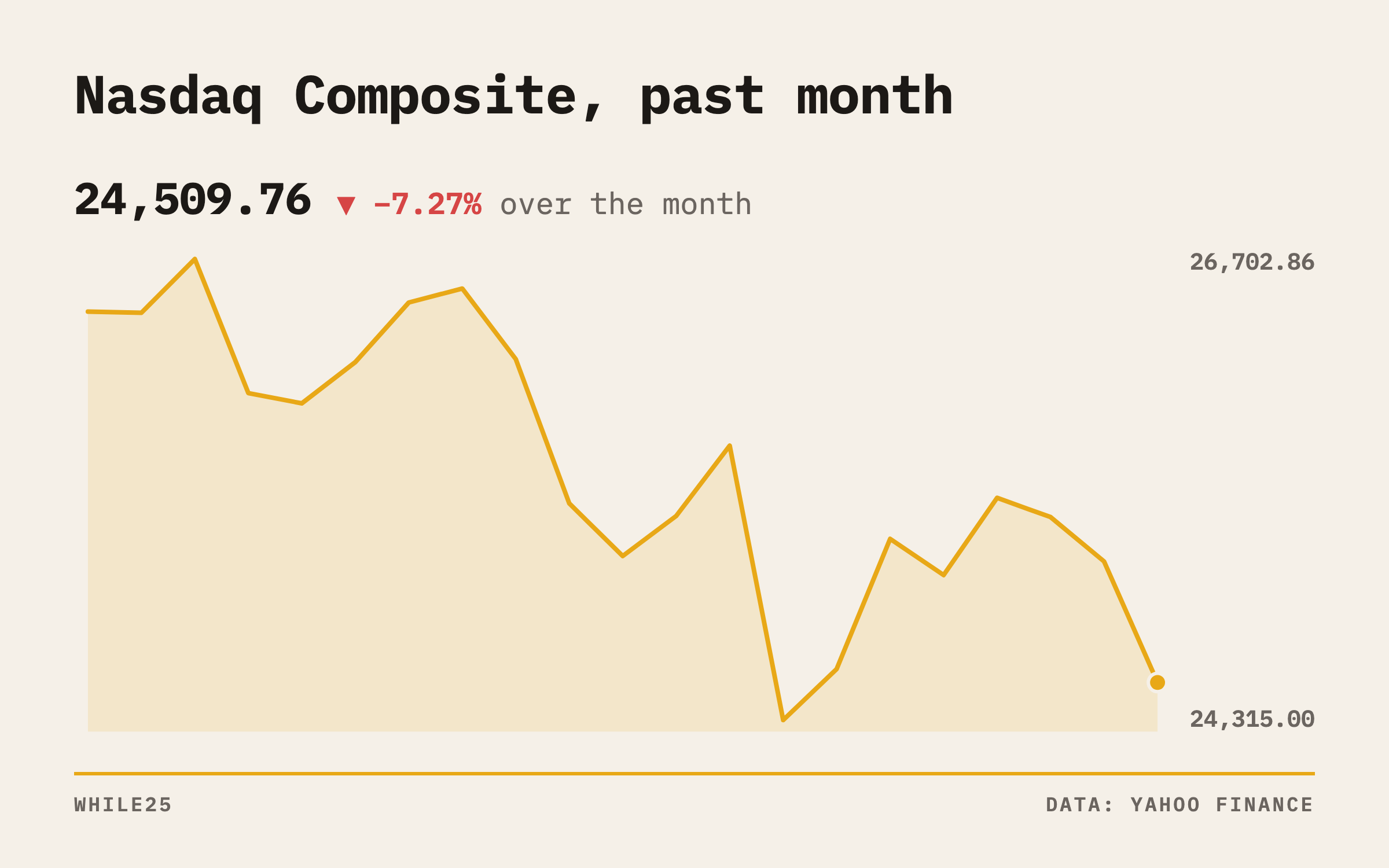 Nasdaq Composite over the past month, falling into Anthropic's pricing week
Anthropic and its banks set the price in three steps. The first step is a published price range. The second is an order book. The third is one decision on the evening before trading. Each step has its own terms, and those terms shape how you should read the headlines.
Step one: the range
A company going public hires investment banks to run the sale. These banks are called underwriters. They agree to buy the shares from the company and resell them to investors. If investors order too few shares, the banks carry part of the risk.
Before the sale, the company and its underwriters publish a price range in a filing with the Securities and Exchange Commission. This agency is the US market regulator. Anthropic's range is $70 to $78. The range is an opening estimate. It gives investors a starting point for their orders.
In the same filing, the company states how many shares it will offer at the start. Anthropic plans to sell 825 million shares. Multiply that share count by the $78 top price, and you get the $64.35 billion figure.
Step two: the order book
After publishing the range, the banks take the deal to large investors. These include pension funds, which manage retirement savings, and mutual funds, which pool money from many savers. This round of meetings is called a roadshow. After the meetings, investors place orders. Each order names a number of shares. Many orders name the highest price the investor will pay.
The banks record these orders in a list called the order book. Filling that list is called book-building. From the book, the banks can see how many shares investors want at each price.
CNBC reported that Anthropic's order book was covered within the $70 to $78 range. "Covered" means the orders at least match the number of shares on offer. The report added the phrase "on an allocable basis." That means the count includes the orders the banks would fill. Banks use this test to set aside padded orders. A padded order asks for more shares than the investor expects to get.
Coverage is a minimum test. It shows that demand met supply at the range. Here, demand means orders and supply means shares on offer. The report gave no figure for any extra demand above that level.
Step three: one price, set the evening before
After the order book closes, the company and its banks pick one price. Anthropic expects to do this on the evening of November 18. The final price can land inside the range, above it or below it. If demand is strong, the company and its banks can raise the price or offer more shares. If demand is weak, they can cut the price or shrink the deal.
After pricing, the banks allocate the shares. That means they decide who gets how many. An investor can receive fewer shares than it ordered. In a book with heavy demand, that outcome is common.
CNBC reported that Anthropic is aiming about 20% of the offering at retail investors. Retail investors are individuals who buy through ordinary brokerage accounts. A brokerage account is an account for buying and selling stocks. In large IPOs, banks tend to place most shares with institutions, meaning large investors such as funds. A retail slice that size spreads the first owners across more small accounts.
Counting future shares
At the top of the range, Anthropic would be worth up to $1.405 trillion on a fully diluted basis. A company's value is its share price times its number of shares. There are two ways to count the shares.
Shares outstanding are the shares that exist today. A fully diluted count adds shares that could exist in the future. Those include employee stock options and stock grants that staff have not earned. A stock option gives its holder the right to buy shares at a set price. The diluted count includes securities that can convert into stock. With more shares in the count, the same price produces a bigger valuation.
That method produces the figure of up to $1.405 trillion. In a May funding round, private investors valued Anthropic at $965 billion. Anthropic and its banks have set a range that values the company above that May round.
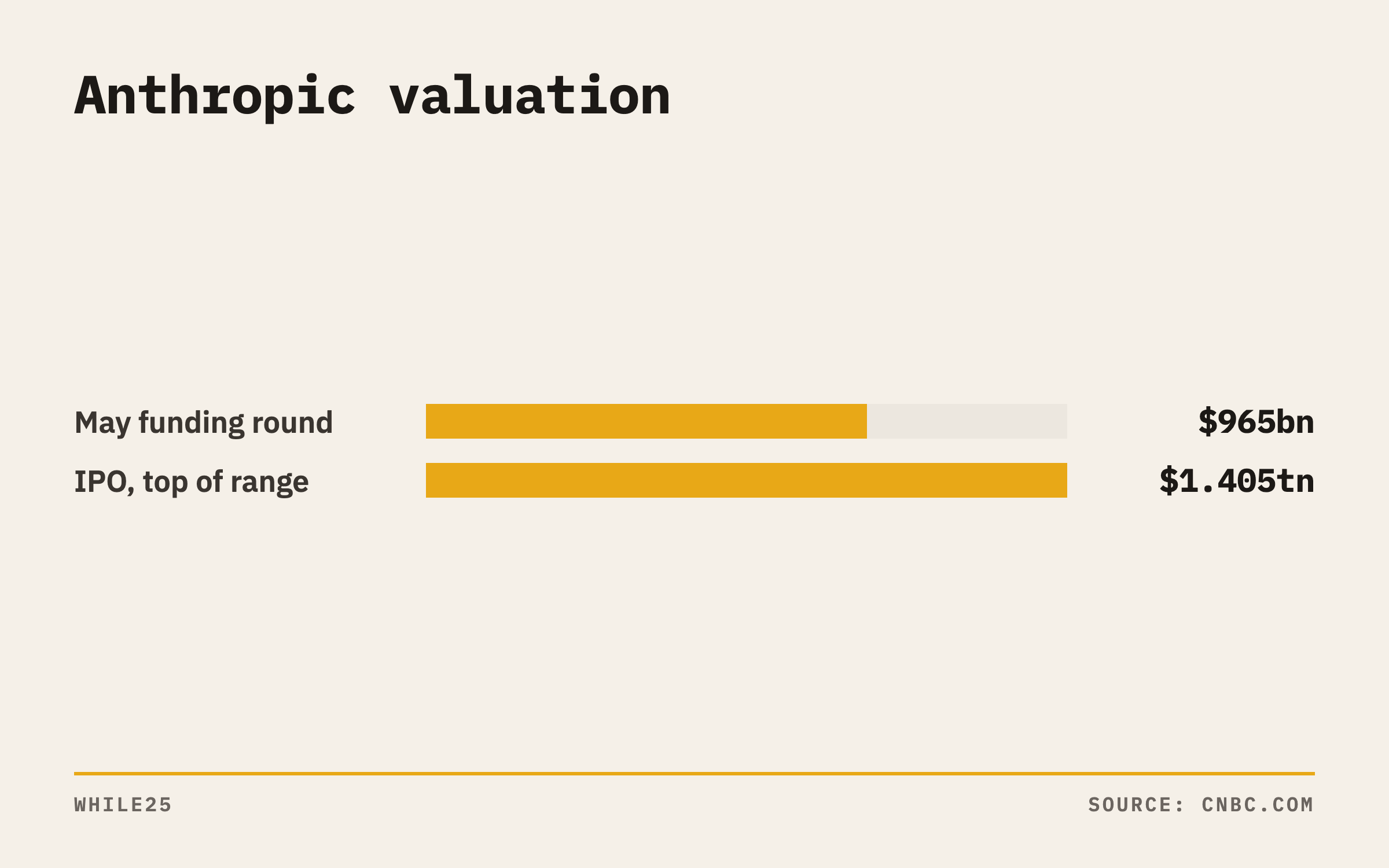 Anthropic's valuation in its May funding round compared with the top of its IPO range
For a buyer, the fully diluted figure is the fuller measure of what the whole company costs. It shows the value if all promised shares become real ones. Some headlines quote a smaller valuation. Those reports may count shares outstanding and leave out future shares. Check which count a number uses before you compare it with another.
The $26 billion with no lock-up
Most IPOs come with a lock-up. A lock-up is an agreement with the underwriters. Under it, early holders cannot sell for a set period after the listing. Early holders include founders, staff and venture investors. Venture investors are funds that back young private companies. With a lock-up in place, insiders cannot unload a wave of shares in the first months of trading.
Anthropic is selling stock in a separate $26 billion private placement. A private placement is a sale of shares to chosen investors outside the public offering. The shares in this sale are Class N common stock. Common stock is the ordinary form of company ownership. Class N is another type of Anthropic common stock. The underwriters' lock-up agreements will not cover these shares.
For a buyer of the public shares, a block of stock sits outside the usual lock-up. The report does not say whether other limits apply to those shares. Anthropic sets those terms in its filing. Readers who care about the supply of shares in the early weeks can check the filing.
The range and the first trade
The company and its banks set the range where they expect to sell. The covered book shows that demand at least matched supply at those prices. On the evening of November 18, they will settle on a final price.
The first trade on November 19 is a separate event. Investors who received shares in the sale pay the IPO price. On listing day, the exchange matches buy and sell orders from the whole market. The price where those orders meet becomes the opening price. That price can differ from the IPO price by a wide margin.
One gauge shows traders' mood ahead of that opening. The VIX measures how much movement traders expect in the S&P 500 over the next month. On November 16, the VIX rose 18.70% to 22.91. A higher VIX means traders are paying more for protection against swings.
For your own trading, keep the two prices apart. The IPO price is a negotiated number for the investors who received shares. Anyone who did not get an allocation buys at the market price once trading opens. The range describes the first number. Buyers and sellers trading on November 19 will set the second.
Sources
Not investment advice.