
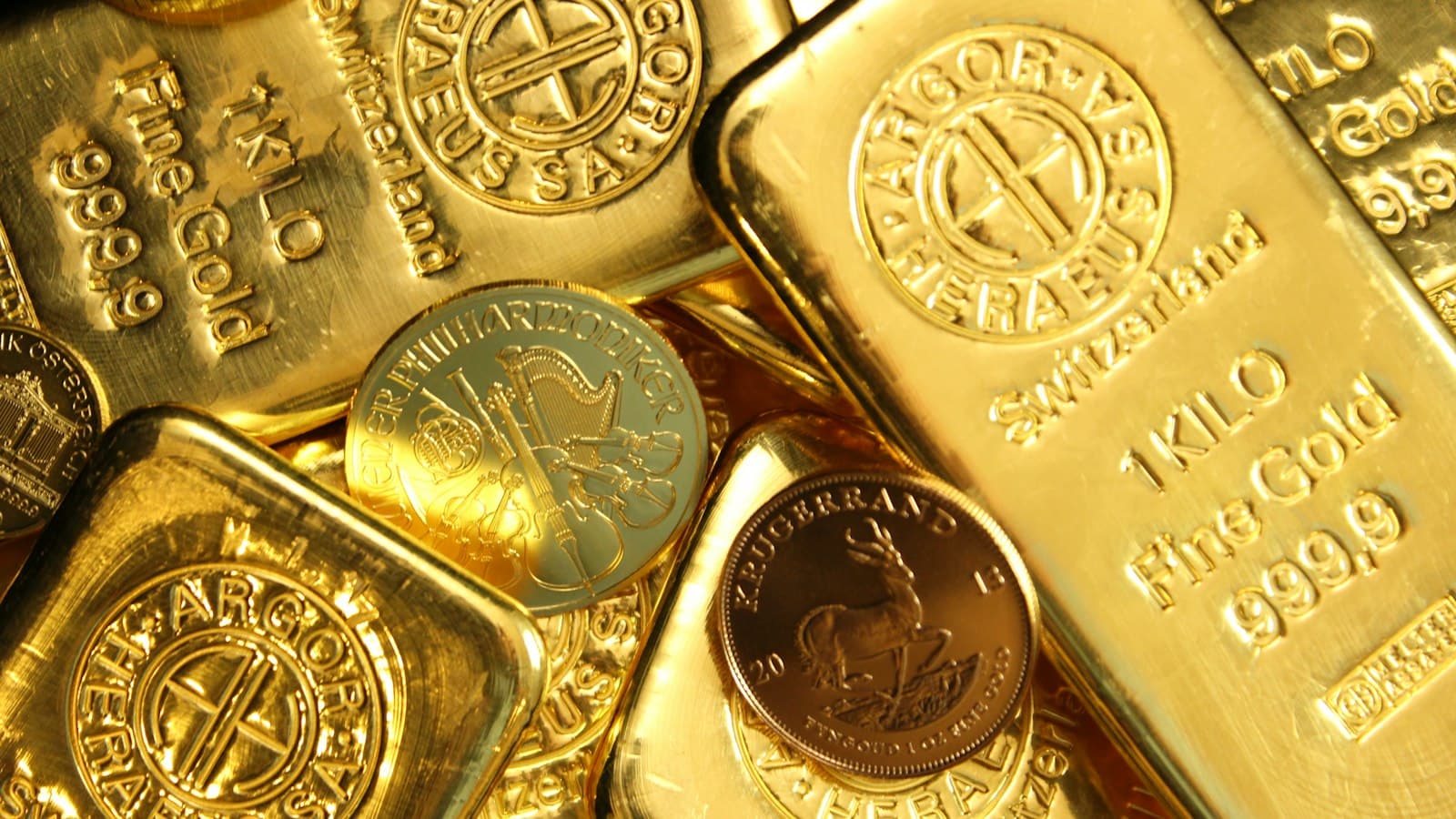
Spot gold is the price for gold delivered now. On October 30, it fell 3.5% to $3,880 an ounce. That was its lowest level since October 6, 2025. Gold futures are contracts to buy gold on a set future date. They closed at $3,898.90, down 3.29%. For the week, they lost 2.72%. Silver fell harder, down nearly 6% to $48.95.
The drop came on a day with conditions that tend to help gold. The US government borrows by selling bonds called Treasurys. The 10-year Treasury yield is the interest rate the government pays to borrow for 10 years. That yield fell 6 basis points to 4.929%. A basis point is one hundredth of a percentage point, so 100 basis points make one percentage point. The US Dollar Index tracks the dollar against a group of major currencies. It slipped 0.16%. Analysts in a Kitco report called the pairing unusual. Gold tends to rise as yields and the dollar fall.
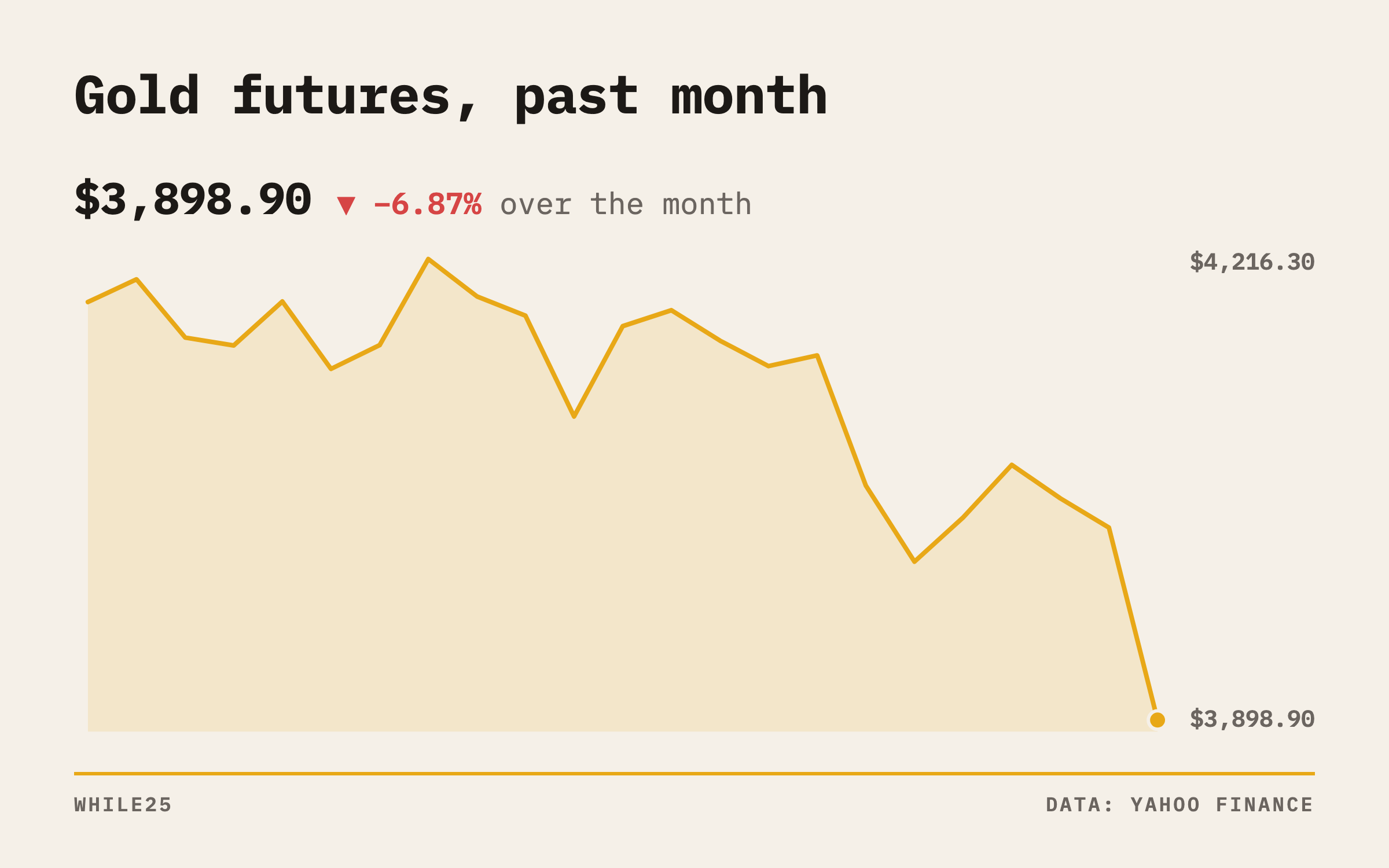 Gold futures price over the past month, ending with a sharp drop on October 30
The usual pattern
Gold pays no interest. A bar in a vault earns nothing, and the owner pays to store and insure it. A Treasury bond or a savings account pays interest. An investor who owns gold gives up that income. Economists call this the opportunity cost. It is the income you pass up by choosing one asset over another.
That cost shrinks as yields fall. If bonds pay less, an investor gives up less by holding gold. For that reason, gold tends to rise as yields fall.
The dollar is a second pull on gold. Traders around the world price gold in dollars. As the dollar weakens, an ounce costs less for buyers who pay in euros or yen. More buyers can afford it, and their buying tends to lift the price.
On October 30, both pulls favored a higher gold price. Two other forces outweighed them, and gold fell.
Force one: bets on a December rate hike
The Federal Reserve is the US central bank. On October 28, Fed officials held their benchmark interest rate at 3.75% to 4%. That is the main rate the Fed uses to steer borrowing costs. The vote was 10 to 2. Governor Lisa Cook and Cleveland Fed President Beth Hammack both voted for a quarter-point hike. A hike is a rate increase, and a quarter point is one quarter of a percentage point.
Traders shifted their rate bets after that vote. Interest-rate futures are contracts that traders use to bet on where rates will go. CME, a futures exchange, turns the prices of those contracts into odds for each Fed meeting. It calls this tool FedWatch. Before the decision, traders saw less than a 10% chance of a hike, according to FedWatch. After the decision, traders' futures bets showed a strong possibility of a hike in December.
Through its rate, the Fed sets what cash and short-term Treasury bills pay. Treasury bills are government loans that last a year or less. If the Fed hikes in December, the safest, shortest-term assets will pay more. Gold holders measure their cost against those assets as well. If cash looks set to pay more, holding gold costs more. That holds while the 10-year yield drifts lower.
Investors set the 10-year yield on a different basis. They price it on their outlook for growth and inflation over a decade. Inflation is the pace at which prices rise. Over the past month, the 10-year yield fell 36.4 basis points. Yet traders raised their expectations for near-term rates after the Fed vote.
The hike talk stems from inflation. In its October 28 statement, the Fed said "Inflation remains elevated." The PCE price index is the Fed's preferred inflation gauge. It rose 3.6% in the year to September. The core version leaves out food and energy. It rose 3.1%.
Force two: margin calls
The second force came from losses in other markets. The Nasdaq Composite is an index, a single number that tracks the stocks listed on the Nasdaq exchange. On October 30, it fell 2.86%, its worst day since June. Intel shares fell 28.58% after the company gave a fourth-quarter forecast that fell short. Alphabet had dropped 12% on October 29, its worst one-day decline on record.
A broker is the firm that holds a trader's account and carries out trades. Many traders borrow from their broker to buy stocks. This is called buying on margin. The broker requires the trader to keep a minimum amount of their own money in the account. If prices fall and the account drops below that minimum, the broker issues a margin call. A margin call is a demand for more cash on a short deadline.
A trader facing a margin call has to raise money. Traders start by selling the assets that are easiest to sell. Traders buy and sell gold in huge amounts around the clock. A seller can get out without a big move in the price. Long-term holders tend to have a profit on their gold. Selling at a profit hurts less than selling at a loss.
Waleed Said of GivTrade argued that traders are selling gold to meet margin calls in other markets. That kind of selling says little about gold itself. These sellers need cash. They can turn gold into large sums of cash in a hurry.
Silver fits the same picture. Investors treat silver, like gold, as a store of value. That is something people hold to keep their wealth. Silver fell nearly 6% the same day.
The oil link
Gold has a long record as an inflation hedge. An inflation hedge is an asset people buy to protect their savings as prices rise. This month, some traders pointed to oil for that job.
Brent crude is the global oil benchmark, a reference price for oil. On October 30, it settled at $117.64, up 2.4%. "Settled" means its official closing price for the day. WTI is the US benchmark. It rose 2.08% to $104.12. Across October, Brent rose 13.6% and WTI rose 15.2%.
Traders also pushed oil higher over danger to Gulf shipping. On October 30, the UK Maritime Trade Operations agency reported that a small boat attached explosive devices that hit a tanker. A day earlier, Iran's IRGC, a branch of its armed forces, said tankers hit mines on a southern route.
Philip Streible of Blue Line Futures made the case for oil. He said: "the rule in the markets is that you are supposed to buy the inflation and oil right now is the inflation." A safe haven is an asset people buy in times of stress. Waleed Said of GivTrade made a related point. He said "Oil and the dollar are taking that role" as the safe haven.
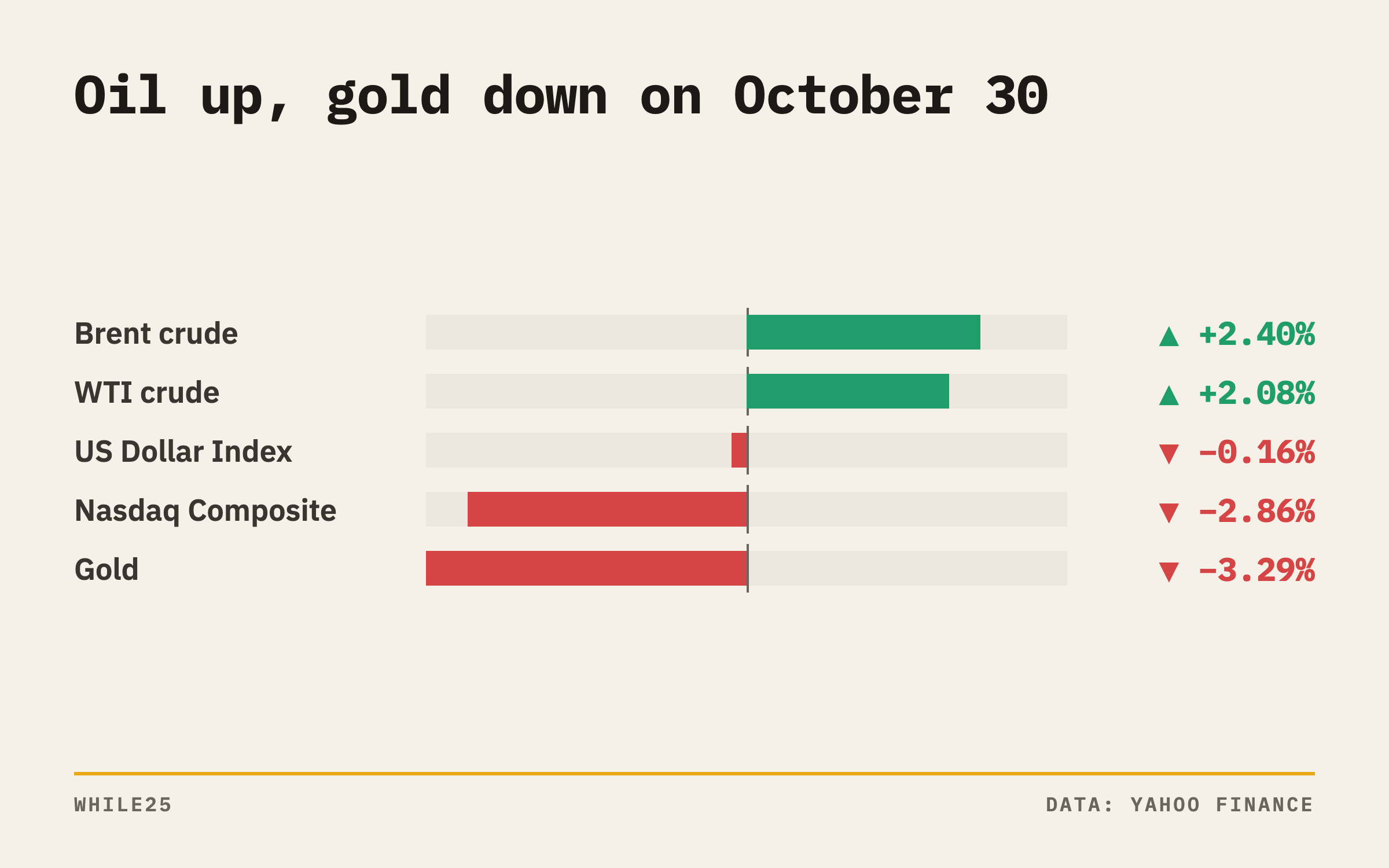 Day change on October 30: oil rose while gold, the Nasdaq and the dollar index fell
The oil rally and the hike bets reinforce each other. Fuel costs feed into the inflation numbers the Fed watches. As those numbers rise, Fed officials keep a December hike on the table. While a hike stays possible, gold stays more costly to hold. Inflation buyers pick oil, and gold holders face a higher cost.
Dates on the calendar
Traders will watch several events this week for signs on both forces.
- November 1: seven core OPEC+ members meet online. OPEC+ is a group of major oil-producing countries. Output targets are the amounts of oil members plan to pump. Three sources told Reuters on October 27 that the group is likely to keep December output targets unchanged.
- November 2: the ISM Manufacturing report for October comes out at 10:00 a.m. ET. It is a monthly survey of US factory activity.
- November 6: the October nonfarm payrolls report comes out at 8:30 a.m. ET. It is the monthly count of US jobs outside farming.
Traders read oil supply news for clues about inflation. They read the jobs and factory reports for clues about a December hike.
The lesson for gold holders
Gold tends to rise as yields and the dollar fall. That pattern broke on October 30, and two forces explain the break. Traders raised their bets on near-term rates while the 10-year yield fell. Traders who lost money on stocks sold gold, an asset that was easy to sell.
A hedge is an asset you hold to offset losses elsewhere. For anyone who holds gold as a hedge, the lesson is about timing. A hedge can fall alongside the assets it is meant to offset. Over the past month, gold futures lost 6.87% and the Nasdaq Composite lost 5.30%. Both fell in the same stretch.
To read gold now, look past the dollar and the 10-year yield. Track the odds of a Fed hike and signs of forced selling in other markets. Those two forces drove the price on October 30.
Sources
Not investment advice.