
Google signed a $4.3 billion deal with Constellation Energy on October 6. Under it, Constellation will bring 890 megawatts of nuclear power online. A megawatt measures how much electricity a plant can deliver at one moment. The contract lasts 20 years. Constellation shares climbed more than 12% on the news. Shares of Alphabet, Google's parent company, were flat.
The power will come from existing reactors. Constellation will upgrade six nuclear plants in Illinois, New Jersey and Pennsylvania to produce it. The upgrades add output without a new plant.
Investors pushed the seller's stock up and left the buyer's in place. A long contract changes how investors judge a power company's future income. The contract comes first.
Step one: Google agrees to buy power for 20 years
The deal is a power purchase agreement. In one, a buyer promises to purchase a plant's electricity at agreed terms for many years. Google is the buyer. Constellation, which owns and runs the plants, is the seller.
Yahoo Finance put the value of this agreement at $4.3 billion. The agreement covers 890 megawatts over a 20-year term.
A household pays a utility, its local power company, whatever the monthly bill says. A large buyer has another option. It can sign with a producer years ahead. That way, it knows where a share of its electricity will come from. The producer knows who will pay for that output.
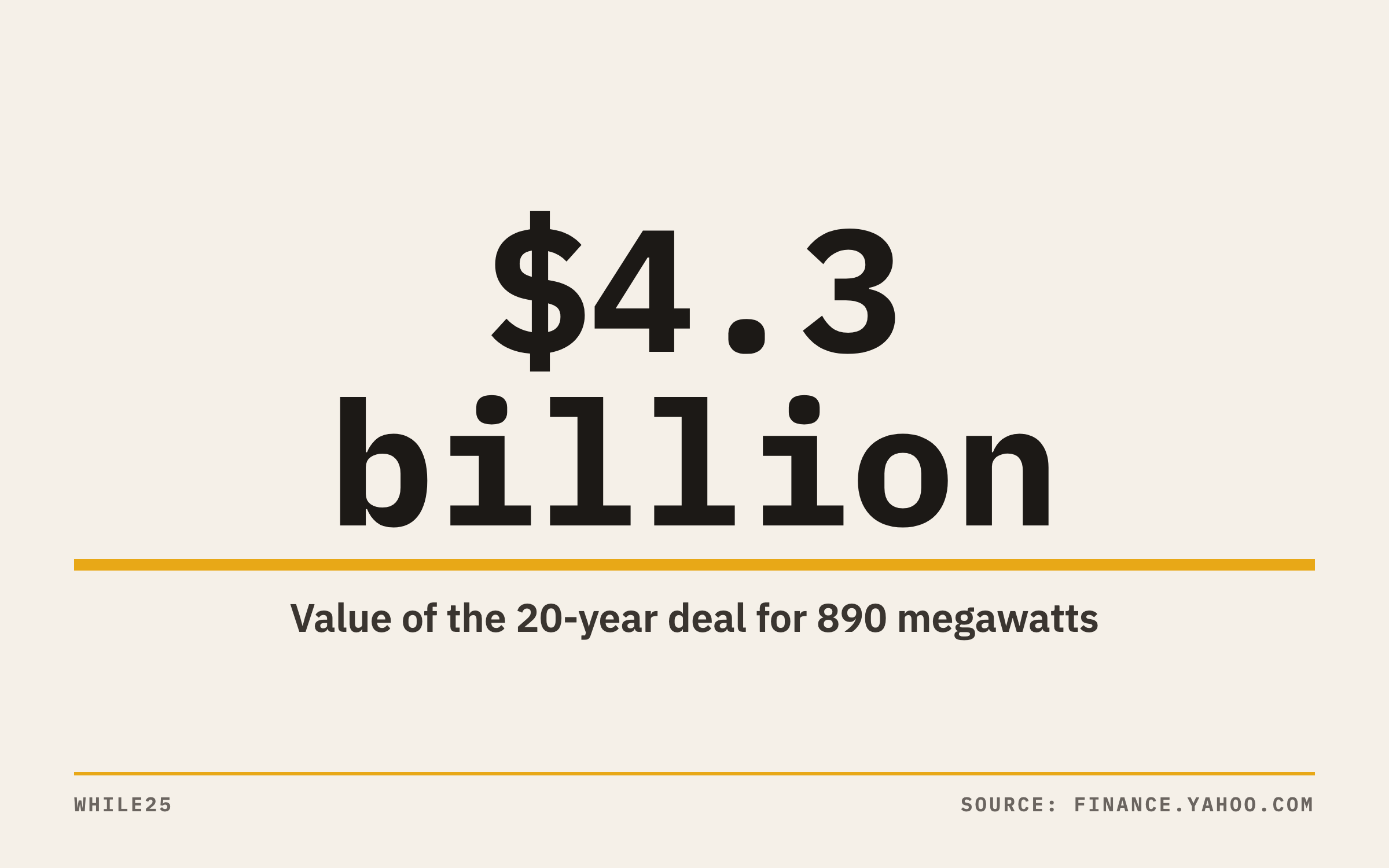 A stat graphic showing Google's $4.3 billion, 20-year power purchase agreement with Constellation Energy for 890 megawatts
Step two: Constellation upgrades the reactors
Adding megawatts lets a plant serve more demand at the same time. The 890 megawatts in this deal will come from upgrades at six existing plants.
A nuclear plant works as a chain. The reactor makes heat. The heat boils water into steam. The steam spins a turbine. The turbine drives a generator, and the generator makes electricity.
Constellation's upgrades target that chain. Yahoo Finance reported that they include modernized turbines, steam generators and digital control systems. Newer equipment can turn more of a reactor's heat into electricity. The site and the reactor stay where they are. So does the plant's link to the power grid, the network of lines that carries electricity to users.
A brand-new nuclear plant needs a site, permits and years of construction. An upgrade adds output at existing plants that feed the grid. Google gets new supply. Constellation gets more power to sell from plants it runs.
Step three: a second, larger agreement
Google and Constellation agreed to a second, separate energy supply deal. It runs 15 years and covers another 2.7 gigawatts of power. A gigawatt is a bigger unit than a megawatt, used for large amounts of capacity.
The cited reports give this second deal's size and length. They give no dollar value for it.
Constellation now has two long agreements with one buyer. The first runs 20 years, and the second runs 15. Under both, a named customer will buy part of the company's output for a long stretch.
The price moves
Constellation stock climbed more than 12% after the announcement. Alphabet stock was flat.
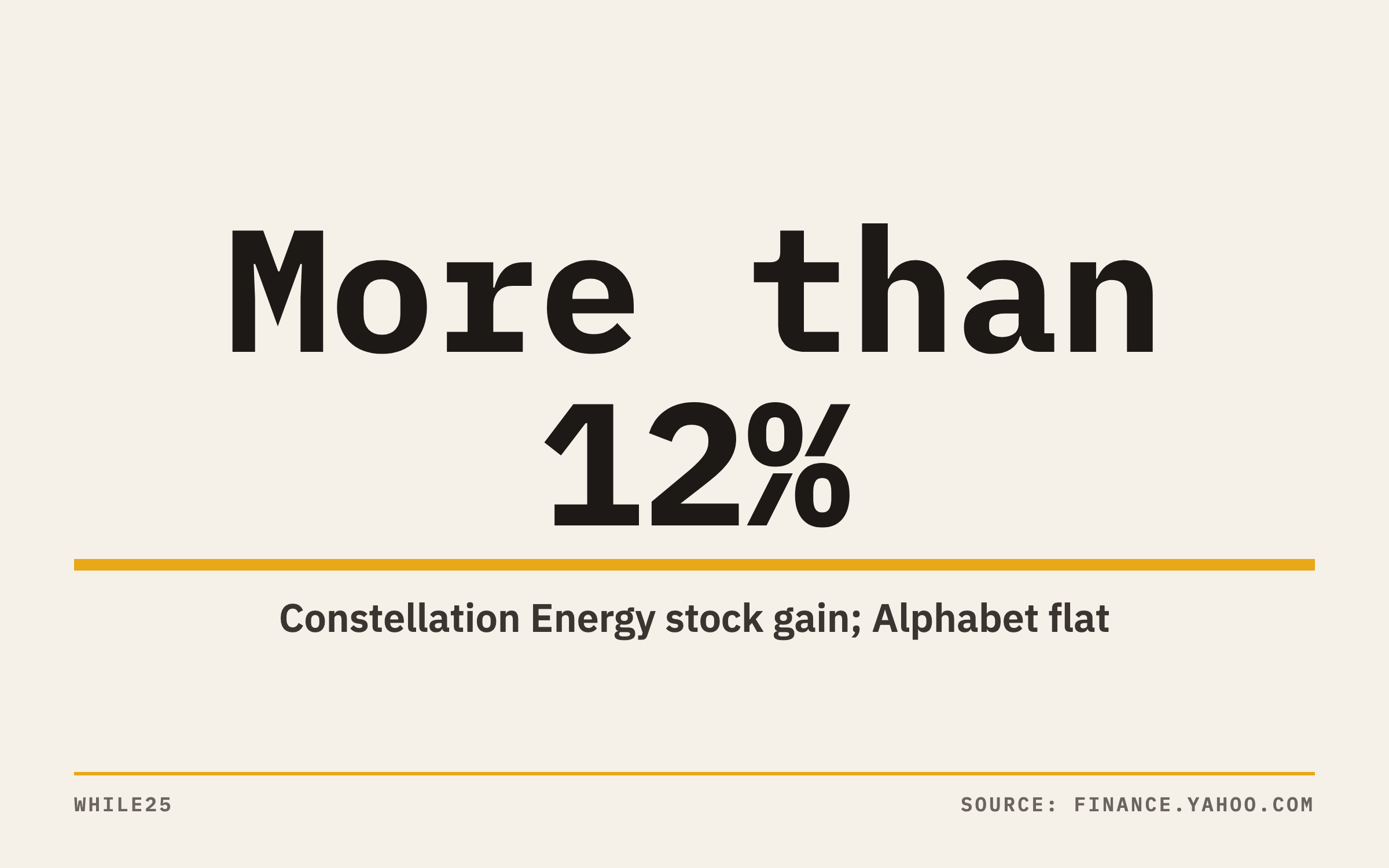 A stat graphic showing Constellation Energy stock rose more than 12% on October 6 while Alphabet stock was flat
Stocks across the market rose the same day. The S&P 500 is an index, a single number that tracks the prices of 500 large US companies. It closed at 7,818.93 on October 6, a gain of 0.58%. That was its first record high since August. AI-related stocks led the rise. The Nasdaq Composite, an index heavy in technology companies, rose 0.45%.
Constellation's gain beat both indexes. Alphabet ranks among the largest companies in both, and its stock did not move.
Behind the seller's jump
A contract is income for one side and a cost for the other. Its weight depends on its size next to each company's business.
Constellation's future income looks different with this agreement in place. A power producer can sell into the open market, where buyers pay the going price at the time. Prices rise and fall with weather, fuel costs and demand. With those swings, future income is hard to estimate.
By signing a 20-year contract, Constellation swapped part of that guesswork for agreed terms. Investors can see who will buy a share of the output and for how long. The new output will come from upgrades that this contract backs.
Analysts, the people who study companies for investors, value a company by estimating the cash it will earn in future years. They discount that future cash, meaning they work out what it is worth today. Income locked in for two decades is easier to estimate than income tied to next month's price. A clearer estimate can change the price investors will pay for a share.
A long contract is worth as much as the buyer's ability to keep paying for the full term.
For Alphabet, electricity is one of many costs of running its data centers and other businesses. Its share price stayed flat on October 6.
Lessons for your portfolio
A portfolio is the mix of investments a person holds. Two lessons from this deal apply to stocks you hold or follow.
Investors can change what they pay for a company's shares before any new power flows. Constellation's stock moved on October 6. The upgrades that create the 890 megawatts lie ahead. Investors reacted to a new view of future income. The new electricity has yet to arrive.
The same deal can carry great weight for one company and little for another. An index fund holds the stocks in an index, giving its owners a small stake in each company. A broad US stock index fund holds both Constellation and Alphabet. On October 6, one of those holdings jumped and the other stayed flat on the same news.
Investors can judge a power producer's long supply contract by two facts: its length, and its size next to the seller's business. Google's deal runs 20 years. Constellation's shares climbed more than 12% the day the companies announced it.
Sources
Not investment advice.