
Offshore oil producers in the US Gulf of Mexico had shut in about 25.08% of their oil production as of October 7. These companies pump oil from wells under the sea. To shut in a well means to stop pumping on purpose for a period. Tropical Storm Isaias was moving toward the coast. The producers had shut in 16.37% of the Gulf's natural gas output as well.
On the same day, Brent crude traded back above $101 a barrel. Crude is oil as it comes out of the ground. Brent is the global benchmark, the standard price that traders around the world use for oil. Attacks in the Strait of Hormuz continued that day. Both stories concern oil, but they come from different risks. Each reaches your portfolio, the set of investments you hold, by a different route.
A shut-in, defined
A shut-in is a planned stop. Before a storm arrives, an oil company closes the valves on its offshore wells and halts pumping. A platform is the structure at sea that holds the wells and the crew. Crews fly off the platform by helicopter. The barrels stay in the reservoir, the rock under the seabed that holds the oil. The oil waits there, ready to flow again.
Producers treat this step as routine in hurricane season. A platform sits in open water with no shelter. Producers close the wells to protect the crew. The step keeps oil out of pipes and equipment that a storm could break.
A company can move people off a platform without stopping its output. Chevron offered an example on October 7. The company said it was evacuating nonessential personnel from its Gulf platforms as a precaution. It said it expected no changes to production or operations at that time.
The agency that keeps the tally
The Bureau of Safety and Environmental Enforcement oversees offshore drilling. It is an agency inside the US Interior Department. Operators are the companies that run the Gulf platforms. During a storm, the agency collects reports from these operators and publishes a running count. In the count, the agency lists the share of current oil and gas production that operators have shut in. It lists the number of manned platforms that crews have left, too. A manned platform is one with workers on board.
For Isaias, the agency reported that personnel had left eight production platforms as of October 7. That was 2.16% of the 371 manned platforms in the Gulf. The share of oil output offline was many times bigger than the share of platforms that workers left. The agency is tracking two different things. In one figure, it counts barrels of oil. In the other, it counts platforms that workers have left.
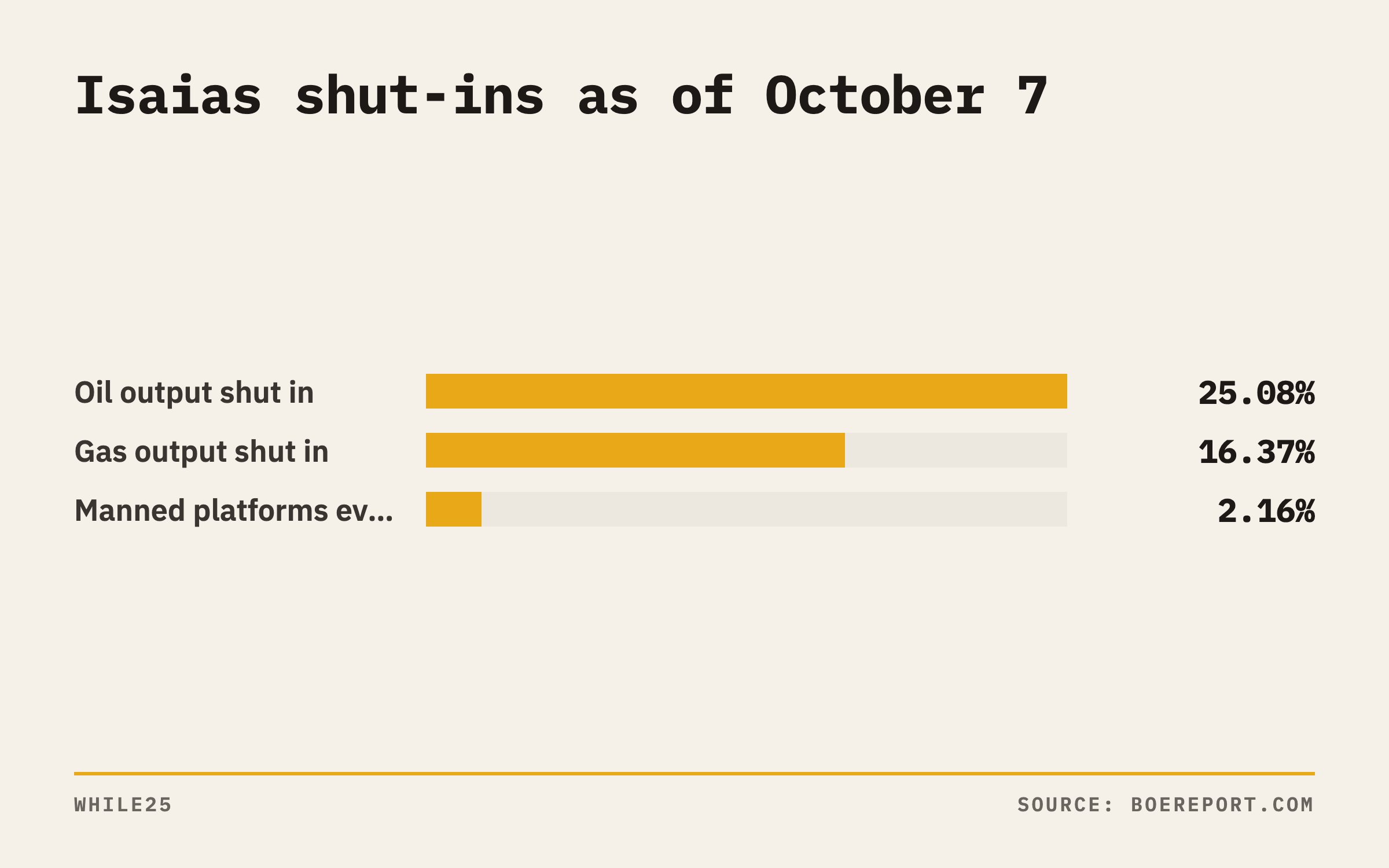 Bar chart showing that 25.08% of US Gulf oil output and 16.37% of gas output were shut in, and 2.16% of manned platforms were evacuated, as of October 7
A pause differs from a loss
The key word in the agency's report is "current." With a shut-in, producers keep barrels off the market for a stretch of time. After the storm passes, crews fly back and inspect the equipment. If the platforms come through without damage, crews reopen the wells once those checks end.
Lost supply takes longer to return. A storm can bend a platform, break an undersea pipeline or flood a refinery on shore. A refinery is the plant that turns crude oil into gasoline, diesel and jet fuel. Many US refineries sit along the coast of Texas and Louisiana, in the path of Gulf storms. A flooded or wind-damaged plant can remain offline for repairs after offshore wells restart.
Refinery damage can push crude and fuel prices in opposite directions. A refinery that shuts down buys less crude. That lowers demand for oil. The same outage cuts the supply of gasoline and diesel. Crude prices can fall while pump prices rise. With an offshore shut-in, producers trim crude supply and leave the plants that use it untouched.
The track of Isaias
Isaias had top sustained winds of 40 miles per hour on October 7. Forecasters expected it to become a hurricane by October 9. They saw it peaking at 95 knots, or 109 miles per hour. That speed would make it a Category 2 hurricane on the Saffir-Simpson scale. The scale ranks storms by wind speed. Forecasters expected heavy rain on the central US Gulf coast and much of the Southeast toward the end of that week.
For oil supply, the storm's path matters more than its wind speed. Forecasters placed the path east of the main offshore oil and gas fields south of Louisiana and Texas. Operators had shut in about 25.08% of Gulf oil output before the storm reached hurricane strength. Storm paths can shift over a few days. Crews need time to leave a platform.
Weather risk and war risk
Brent traded back above $101 a barrel on October 7. It closed at $100.95, up 0.37% on the day. The close is the last price when trading ends for the day. UK officials have reported at least nine attacks in the Strait of Hormuz since October began. The attacks come amid a continuing conflict between the US and Iran. The strait is the narrow channel between Iran and Oman. Tankers use it to carry crude from the Persian Gulf to buyers around the world.
West Texas Intermediate, or WTI, is the main US crude benchmark. It traded close to $90 a barrel during the trading day. It closed at $88.94, down 0.56%. US Gulf producers had about a quarter of their oil output offline that day. Even so, the US benchmark ended lower.
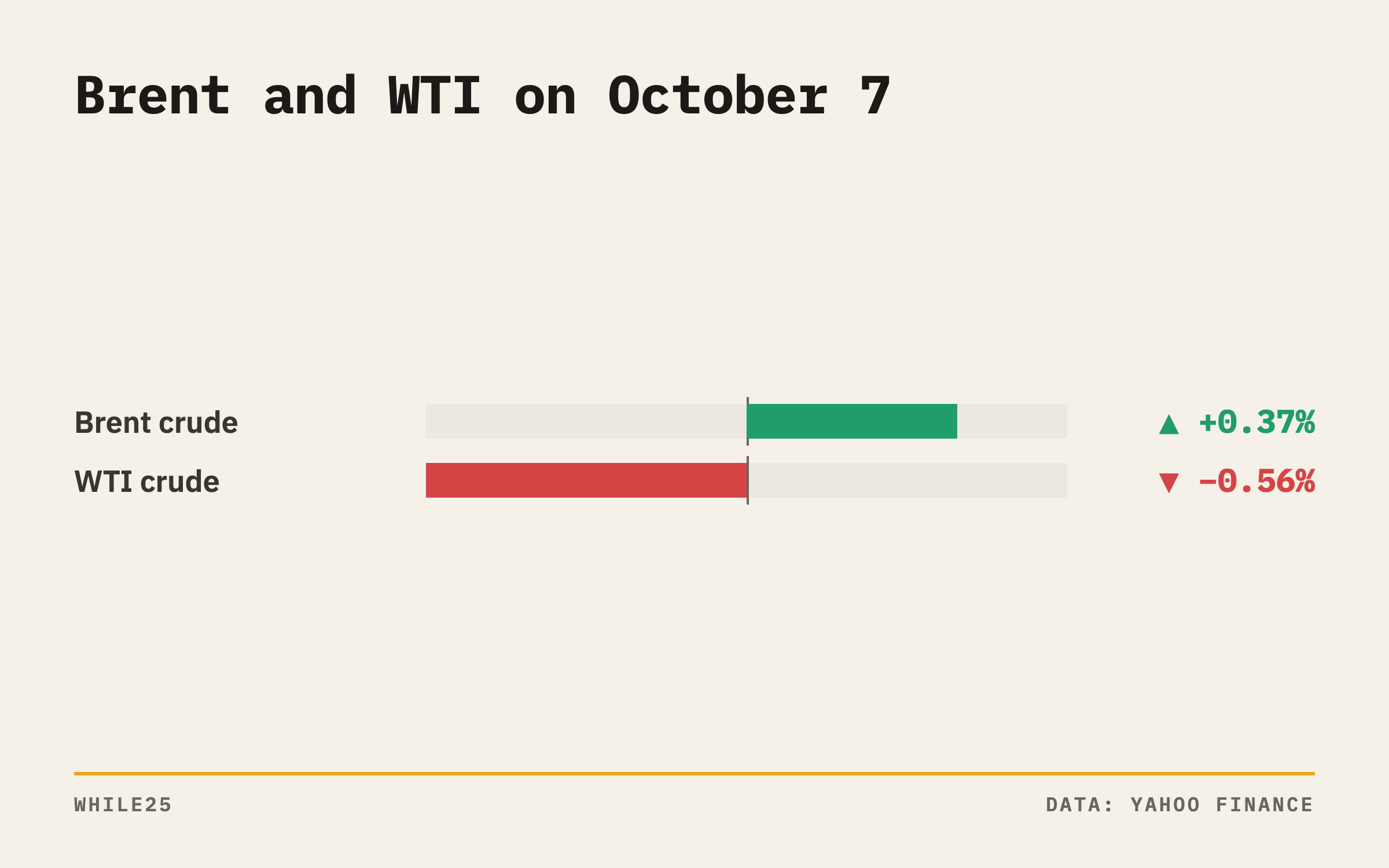 Bar chart of day changes on October 7 showing Brent crude up and WTI crude down
The two risks run on different timelines. A hurricane shut-in has a start and an end. Operators report it and a federal agency adds it up. Crews return when the storm clears. Traders can follow the agency's tally each day.
The Hormuz attacks threaten a shipping route. That risk lasts as long as the conflict does. No agency publishes a daily figure for how much of it has cleared.
Reading the next storm headline
From a shut-in figure, you learn how much output has paused. You learn little about lasting damage. Two follow-up reports matter more. The first is the agency's daily update. In it, you can see whether the shut-in share rises or falls as the storm moves. The second is the set of damage reports from platforms, pipelines and coastal refineries after the storm has passed.
You might own energy stocks, which are shares in oil and gas companies. You might hold an oil fund, a fund that invests in oil, or airline shares. Both risks can reach those investments through the price of crude. If you tell the two risks apart, you can read a move in oil for what it is. A storm that skirts the main fields and leaves refineries intact is a pause in supply. Attacks on tankers in Hormuz are a different kind of risk, tied to a conflict with no published end date.
Sources
Not investment advice.