
Investors pushed Humana shares up 15% in premarket trading on Friday, October 9. A share is a small slice of ownership in a company. Premarket trading is buying and selling before the stock exchange opens for its regular session.
Investors were reacting to a government report card on health plans. Humana said 95% of its Medicare Advantage members will be in plans rated four stars or higher in 2027. In 2026, that figure was 20%.
Analysts, the researchers who study companies for investors, called Humana the biggest beneficiary of the 2027 star ratings. J.P. Morgan had expected Humana to land between 60% and 70%. Humana landed above that range.
Investors paid more for Humana stock because the government ties money to this quality score.
The star scale
Medicare is the US government's health insurance program for older Americans. Medicare Advantage is the private version of it. Insurers such as Humana, UnitedHealth and CVS Health run these plans. The government pays them to cover members on its behalf.
The US health department grades each plan on a scale of one to five stars. It rates prescription drug plans the same way. The department scores quality, such as how a plan handles members' medicines and ongoing care.
Evercore ISI, an investment research firm, pointed to the measures behind Humana's gain. It cited stronger results in drug-plan quality, health-plan quality and hospital readmissions. A readmission means a patient goes back into hospital a short time after doctors send them home. Fewer readmissions are a sign that the first stay and the follow-up care went well.
The health department gave a figure for the whole industry. About 71% of Medicare Advantage drug plan members sit in contracts it expects to rate four stars or higher in 2027. A contract is an insurer's agreement with the government to run one or more plans. Humana's 2026 figure of 20% sat below that mark. Its 2027 figure of 95% sits above it.
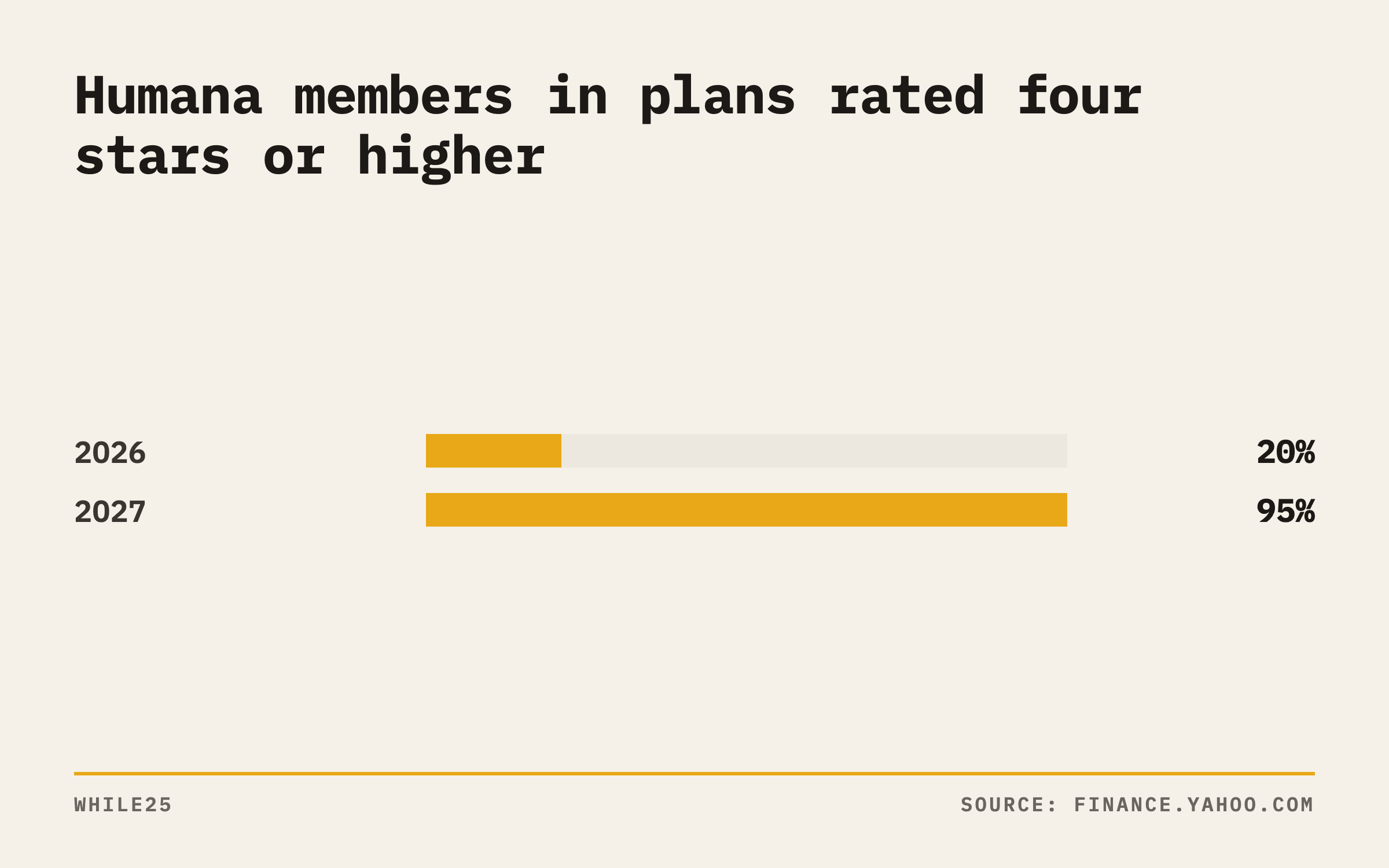 Bar chart showing Humana members in plans rated four stars or higher rising from 20% in 2026 to 95% in 2027
From stars to revenue
Revenue is the money a company takes in before it pays its costs. Under the health department's system, the government pays bonuses worth billions of dollars for higher ratings. Four stars is the cutoff. Insurers with plans at four stars or above earn the bonus. Insurers below that line miss out.
Insurers gain from high ratings in a second way. People shopping for a Medicare plan see the stars next to each option. Shoppers tend to see a plan with more stars as the safer choice at a similar price. The health department says higher ratings help boost enrollment, the number of people who sign up.
Evercore ISI estimates Humana could collect about $4.8 billion in bonus payments in 2028 from the new ratings. Investors can now attach a dollar figure to the rating. They can put a quality grade into a revenue forecast, which is a projection of future sales.
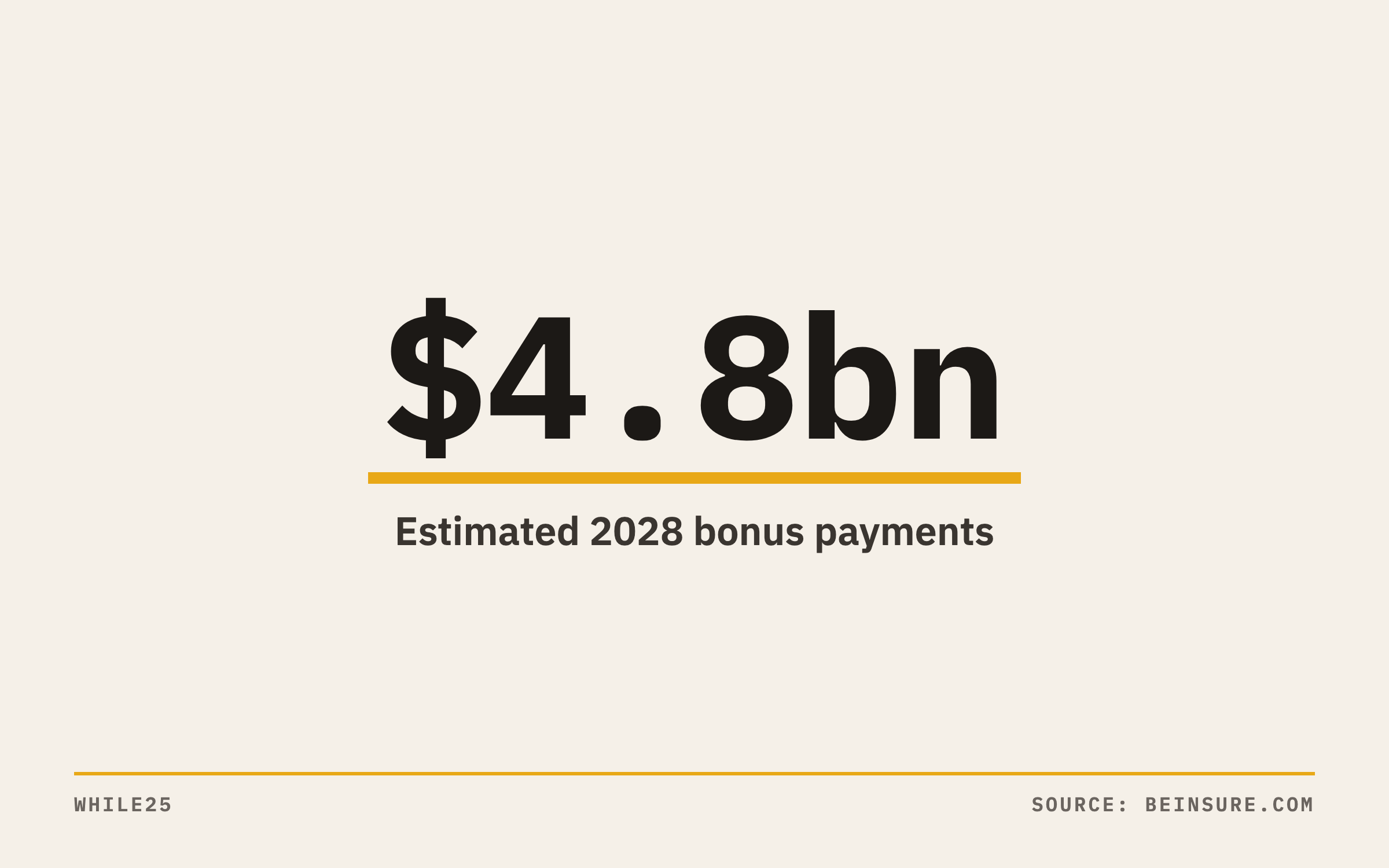 Big number: Evercore ISI estimates about $4.8 billion in 2028 bonus payments for Humana
The payment delay
Many first-time readers mix up the dates. The health department released these ratings in October 2026. They carry a 2027 label. Evercore's bonus estimate is for 2028.
Insurers work on a long calendar, and that creates the gap. Insurers design and price their Medicare Advantage plans ahead of the year those plans cover. The government needs time to turn a score into a payment rate. Insurers earn a rating on past performance and collect the cash at a later date.
Humana feels the delay on both sides. It collects payments tied to its weaker 2026 ratings before the new ones. The October 9 ratings describe money Humana will receive in a later year. Investors can price that future money into the stock today. The income statement, a company's record of revenue, costs and profit, will show the money in a later year.
Investors in health insurance stocks see a pattern because of this timing. Investors can move a share price more on ratings day than on a quarterly earnings report. An earnings report gives a company's results for a three-month period. The health department's ratings shape revenue for a future year, and investors trade on that year today.
The other side of the ratings
Analysts estimated declines for Humana's largest rivals on the same day. J.P. Morgan estimates UnitedHealth's share of members in plans rated four stars or higher will fall from 81% to about 67%. CVS Health owns the insurer Aetna. For CVS Health, J.P. Morgan estimates a drop from 84% to about 70%.
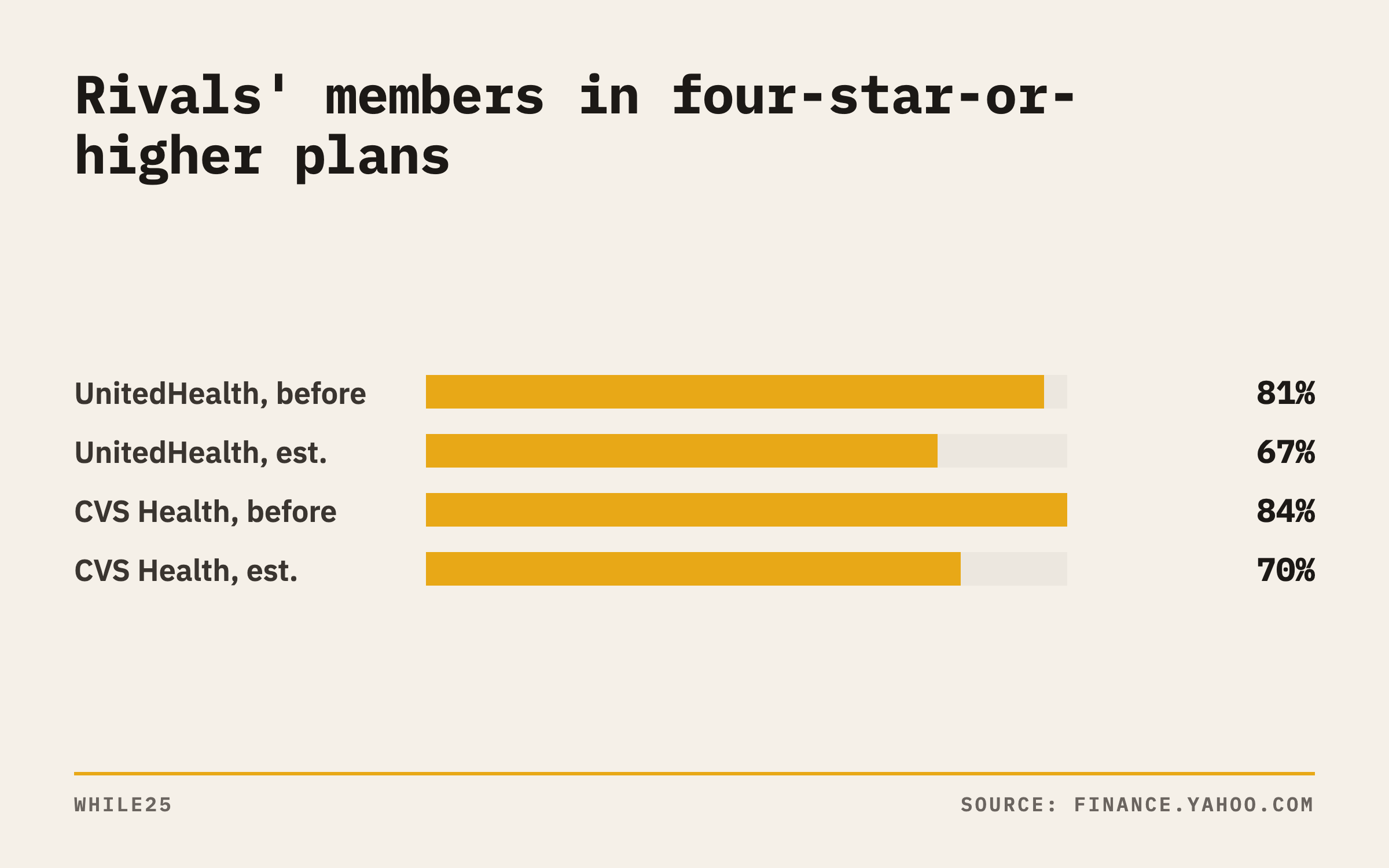 Bar chart of J.P. Morgan estimates: UnitedHealth falling from 81% to 67% and CVS Health from 84% to 70% of members in four-star-or-higher plans
Humana and its rivals swapped places. In 2026, both rivals sat above Humana's 20%. For 2027, both sit below Humana's 95%.
An insurer with fewer members in top-rated plans collects less bonus money in later years. The same timing rule applies. Insurers feel a weaker rating in a later payment year, after the headlines have faded.
The reinvestment question
Profit is the money a company keeps after it pays its costs. Baird, another investment research firm, said the effect on profitability would depend in part on how much of the extra funding Humana reinvests.
Reinvesting here means spending the money on members. An insurer can use bonus dollars to cut premiums or lower copays. A premium is the monthly price of a plan. A copay is a fixed fee a member pays for a doctor visit or a prescription. An insurer can add extras, such as dental or vision coverage. Shoppers find a plan with richer benefits more attractive.
Humana faces a trade-off. It can spend the money on benefits to draw new members. Each new member brings more government payments. Money Humana spends on benefits is money it cannot keep as profit. Humana can turn a larger bonus into faster enrollment growth or wider profit margins, or a mix of both. A profit margin is the share of revenue a company keeps as profit.
Baird's point is the main caveat to Evercore's $4.8 billion estimate. Evercore's figure is an estimate of revenue. Humana's profit depends on plan design choices the company has not published.
The effect on your portfolio
A portfolio is the mix of investments a person owns. Health insurers depend on government payment formulas. Investors moved Humana's shares 15% on one ratings release, before the opening bell on October 9. The opening bell marks the start of regular trading. Under J.P. Morgan's estimates, owners of UnitedHealth or CVS shares face the same effect in reverse.
Many investors own all three companies without choosing them. All three belong to the S&P 500, an index that tracks large US companies. By the close on October 9, investors had lifted the S&P 500 by 0.59%. An index fund buys the stocks in an index. An index fund holder owns the winners and the losers of each ratings cycle at once.
The health department releases the ratings each fall. The government pays the money in a later year. Investors in these stocks can follow two numbers. The first is the share of members in plans of four stars or more. The second is how much of the resulting bonus each company hands back to members as richer benefits.
Sources
Not investment advice.